


ALFAFUELS PRESENTS LIGHT-DRIVEN ROUTE TO AVIATION FUEL AT PHOTOIUPAC 2026 IN ZAGREB
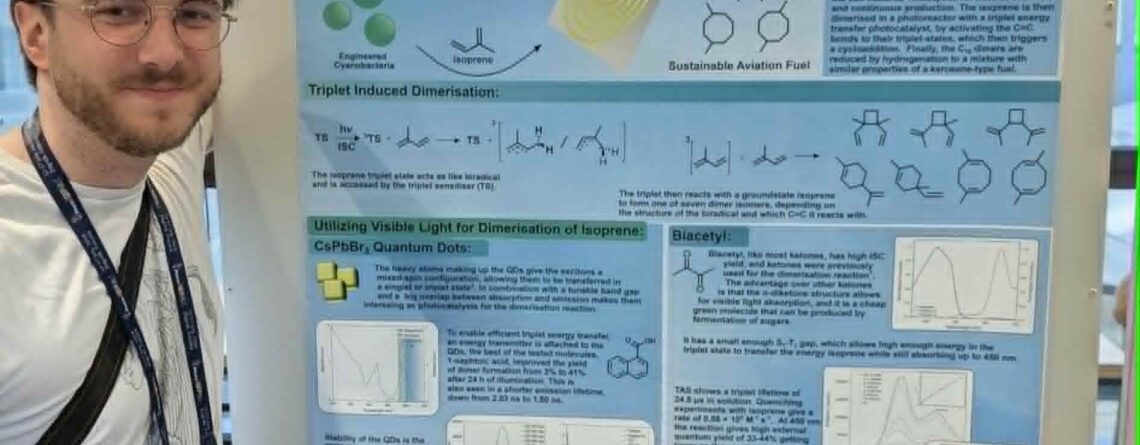
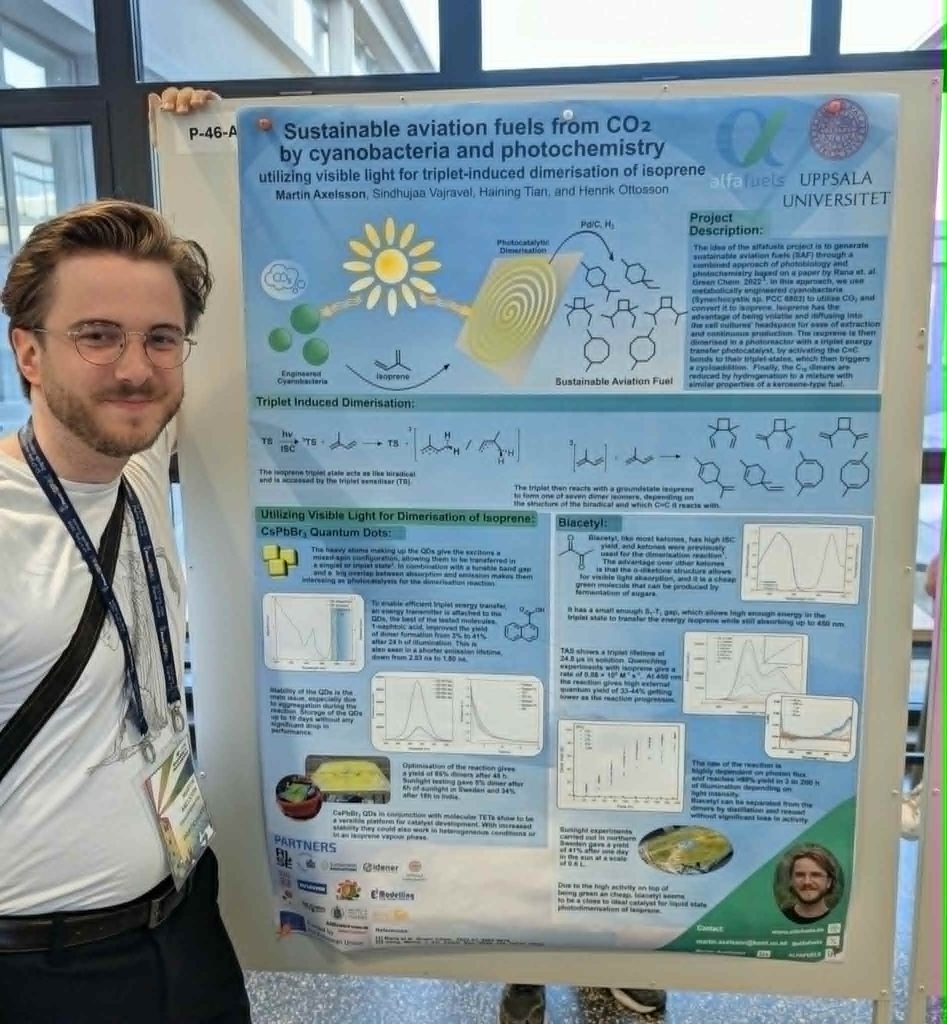
ALFAFUELS was represented this summer at the 30th IUPAC Symposium on Photochemistry (PhotoIUPAC 2026) in Zagreb, Croatia. The event is one of the longest-running international meetings on the interaction between light and matter, and it brings together researchers working on photocatalysis, sustainable energy and new photochemical methods. Martin Axelsson from Uppsala University presented a poster titled “Sustainable aviation fuels from CO₂ by cyanobacteria and photochemistry”, co-authored with Sindhujaa Vajravel, Haining Tian and Henrik Ottosson.
The poster explained how ALFAFUELS combines biology and chemistry to turn CO₂ into jet fuel. First, engineered cyanobacteria capture CO₂ and convert it into isoprene, a volatile compound that can be collected continuously from the cultures. Visible light and a photocatalyst then join pairs of isoprene molecules into larger molecules. A final treatment with hydrogen turns these molecules into a fuel mixture with properties similar to kerosene.
The team compared two light-activated catalysts. Tiny semiconductor crystals known as quantum dots reached yields of up to 85% after 48 hours. The second catalyst, biacetyl, performed particularly well. It is cheap, it can be produced by fermenting sugars, and it can be recovered and reused without losing activity. In outdoor tests in northern Sweden, biacetyl converted 41% of the isoprene after a single day of natural sunlight.
These results show that sunlight can drive a key step in making aviation fuel from CO₂, which moves ALFAFUELS closer to a greener and more circular fuel production process. Attending PhotoIUPAC 2026 also gave the team a chance to share its progress with the international photochemistry community and to exchange ideas with researchers in the field.




Leave a Reply